The Daily Ride

Your Daily Dose of Cycling and Racing.

  • It began with the sickening crack of carbon fiber against unforgiving asphalt. On a descent in the 2024 Tour of the Basque Country, the cycling world held its breath as Jonas Vingegaard, the reigning two-time Tour de France champion, lay motionless in a concrete ditch, his season—and perhaps his career—shattered alongside his clavicle and ribs. It was a moment of profound fragility for a rider who had seemed invincible, the quiet king of the mountains brought low by a cruel twist of fate. The yellow and black jersey of Team Visma | Lease a Bike, a symbol of dominance, was suddenly a shroud of uncertainty.

    Yet, from the sterile confines of an intensive care unit to the sun-scorched roads of France, a story of incredible resilience began to unfold. The team itself dubbed it “A TRUE RENAISSANCE”. In a feat of superhuman determination, Vingegaard returned to the 2024 Tour de France, a shadow of his former self physically, but with a spirit forged in the crucible of his recovery. “If you had told me three months ago after the crash that I would be able to finish second in the Tour, I wouldn’t have believed it myself,” Vingegaard admitted, his words underscoring the sheer improbability of his comeback. While he ultimately conceded the maillot jaune to his great rival, Tadej Pogačar, his presence on the podium in Nice was a victory of a different, more profound kind.

    That comeback, however, was not the end of the story; it was the prologue. For the 2025 Tour de France, Team Visma | Lease a Bike has responded not with caution, but with overwhelming force. They have assembled what is, on paper, one of the most powerful and versatile Grand Tour squads in modern history. It is an armada built for a singular purpose: to reclaim the throne. Alongside Vingegaard stand Wout van Aert, the all-powerful “Swiss army knife”; Matteo Jorgenson, the ascendant American star; Simon Yates, fresh off a cathartic Giro d’Italia victory; and a legion of specialists including Sepp Kuss, Tiesj Benoot, Victor Campenaerts, and Edoardo Affini. This is Visma’s ultimate strategic answer to the Pogačar problem. But as the peloton prepares to roll out of Lille, the central question hangs heavy in the summer air: Is this collection of individual brilliance and collective might enough to dethrone a king who has redefined the limits of the sport?

    Lineup

    1. Jonas Vingegaard: Pogačar’s arch-nemesis
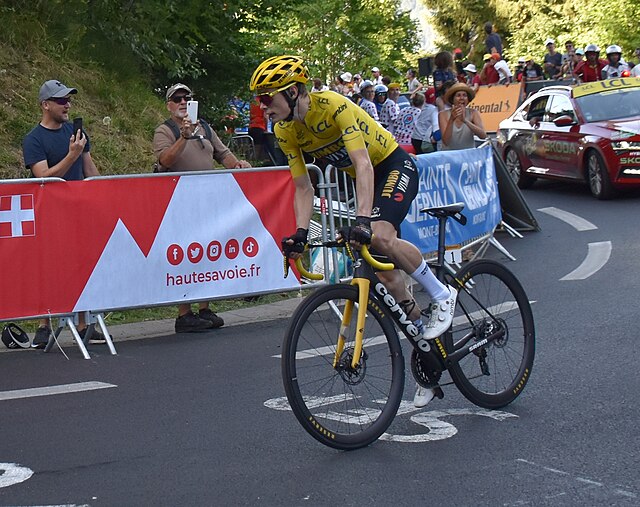
    Credit: Jonas Vingegaard @René Hourdry Creative Commons Attribution-Share Alike 4.0

    At the heart of the Visma machine is Jonas Vingegaard, the unassuming figure from the fish factories of Hillerslev, Denmark, who transformed into a two-time Tour de France champion. His riding style is a reflection of his personality: quiet, economical, and ruthlessly efficient. He doesn’t possess the explosive punch of his rivals, but his genius lies in his ability to sustain an otherworldly tempo in the high mountains, slowly and methodically suffocating the opposition.

    His 2025 season has been a microcosm of his career—a mix of quiet dominance and unnerving setbacks. An early overall victory at the Volta ao Algarve signaled that his recovery from the 2024 trauma was complete. However, a subsequent abandonment at Paris-Nice served as a stark reminder of his fragility, raising questions about his consistency in the face of a full season’s racing load. The most critical test came at the Critérium du Dauphiné, the traditional Tour warm-up. There, he went head-to-head with Pogačar and finished a strong second. This performance confirmed he is back at a world-class level, but it also provided a crucial piece of intelligence: in a straight duel, Pogačar may currently hold a marginal advantage.

    This realization has forced a fundamental shift in Visma’s strategic thinking. In their victorious 2022 and 2023 campaigns, they could operate under the assumption that Vingegaard was, at worst, Pogačar’s equal in the mountains. The results of the 2024 Tour and the 2025 Dauphiné challenge that premise. The team’s management, in assembling this 2025 squad, has implicitly acknowledged that they can no longer rely on a simple strategy of their leader dropping the other on the final climb. They need to win the race tactically, creating scenarios where Vingegaard’s endurance and the team’s depth can overcome Pogačar’s individual brilliance. Vingegaard’s greatest weapon, therefore, may no longer be just his legs, but the mental fortitude he forged in 2024. He has faced the abyss and returned, making him an incredibly difficult opponent to break psychologically over the grueling three weeks of the Tour.

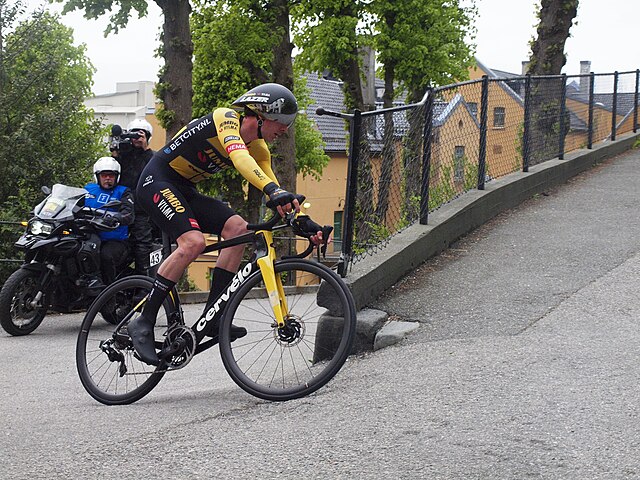
    2. Wout van Aert: The Swiss Army Knife
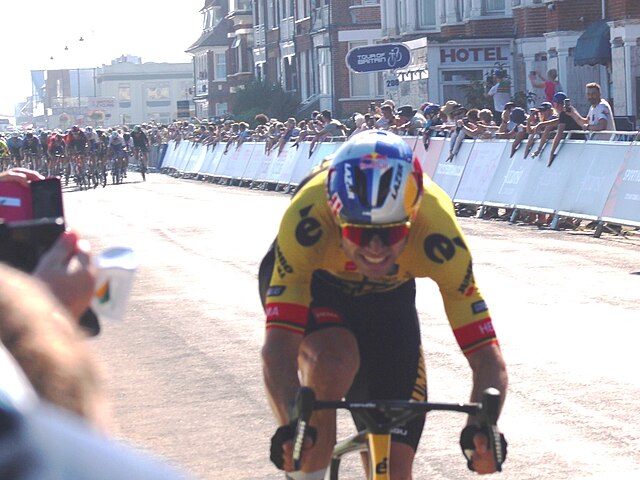
    Credit: Wout van Aert @Geof Sheppard Creative Commons Attribution-Share Alike 4.0

    There is Wout van Aert, and then there is everyone else. The Belgian is not merely a cyclist; he is a cycling phenomenon, a rider capable of winning bunch sprints, time trials, and mountain stages, often in the same race. In 2025, he is Visma’s ultimate all-terrain weapon. His role is multifaceted: he will hunt for his own stage wins, pilot Vingegaard through the treacherous, windswept flat stages of the first week, and, most critically, serve as a “satellite rider” in the high mountains.

    Like his leader, Van Aert has stared down his own injury nightmare, battling back from a horrific crash in 2024 that derailed his spring classics campaign. His performance at the 2025 Giro d’Italia was a masterclass in resilience and a perfect preview of his Tour duties. He claimed a stunning victory on the gravel roads of Stage 9, proving his individual class is as sharp as ever. But it was his performance on Stage 20 that had every rival team taking notes. After spending the day in the breakaway, he waited for his then-leader, Simon Yates, and delivered a monstrous, race-winning pull in the valley that secured the maglia rosa for his teammate. It was a live-fire demonstration of the satellite tactic, proving he can sacrifice his own chances for the team’s greater goal. This loyalty is reinforced by a career-long contract with the team, a pact of “freedom-for-loyalty” that ensures his commitment is absolute when the call comes.

    3. Matteo Jorgenson: The American Ascendancy

    Credit: Matteo Jorgenson @Martino Photos Creative Commons Attribution-Share Alike 2.0

    The rise of Matteo Jorgenson has been nothing short of meteoric. The American from Idaho has evolved from a promising talent into a bona fide star and is designated as Vingegaard’s most important mountain lieutenant and the team’s “second captain”. He is Plan B. His breakthrough came in the 2024 Tour, where he finished an impressive 8th overall while dedicating himself to Vingegaard’s cause.

    His 2025 season, however, saw him take a massive leap forward. At Paris-Nice, after Vingegaard was forced to withdraw, Jorgenson stepped seamlessly into the leadership role. With tactical brilliance and immense strength, he seized the overall victory, becoming the first American in 18 years to win the prestigious “Race to the Sun”. This victory was not a fluke; it was the announcement of a new GC contender on the world stage. His presence provides Visma with a formidable second prong of attack. If rival teams focus too heavily on Vingegaard, Jorgenson has the credibility and the power to launch a race-winning move of his own, creating a tactical nightmare for the opposition.

    4. Simon Yates: The Pink Avenger
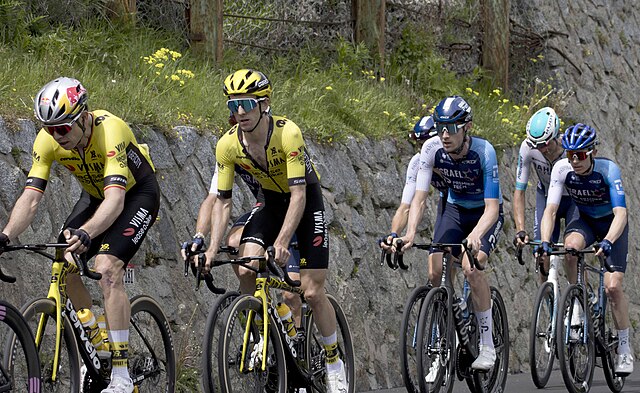
    Credit: Simon Yates @filip bossuyt Creative Commons Attribution 2.0

    When the road tilts skyward, Visma will unleash a formidable trio of climbers. Headlining this group is Simon Yates, whose inclusion represents the team’s biggest and most fascinating gamble. He arrives at the Tour fresh from a career-defining victory at the Giro d’Italia, where he exorcised the ghosts of his infamous 2018 collapse on the Colle delle Finestre with a spectacular, redemption-fueled ride on the very same climb. The emotional and psychological momentum from that victory is immense, and his decision to move to Visma has been validated in the most spectacular fashion. The risk, however, is the  

    colossal physical toll of targeting two Grand Tours in a single season. If he has recovered, he is a world-class weapon; if not, he could be a passenger.

    5. Sepp Kuss: The Loyal Deputy
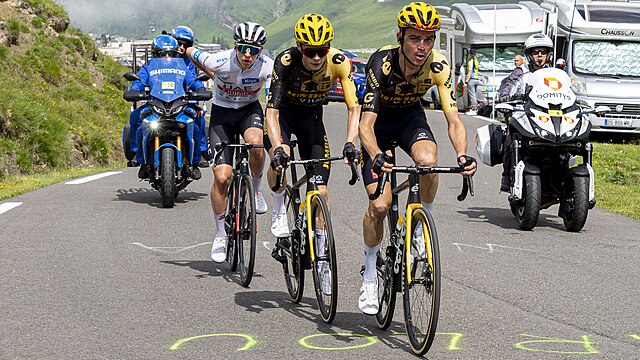
    Credit: Sepp Kuss @Shougissime Creative Commons Attribution-Share Alike 4.0

    Alongside him is Sepp Kuss, the “Eagle of Durango,” who returns to his preferred role as a “super-domestique”. After the immense pressure of his own Vuelta victory in 2023 and a challenging 2024 season as a leader, Kuss is now unburdened, free to be the explosive, race-breaking climber who was so instrumental in Vingegaard’s previous Tour wins. His solid 13th place at the Dauphiné indicates he has the form to be a decisive factor in the high mountains.

    6. Tiesj Benoot: The Devoted Belgian Evergreen

    Credit: Tiesj Benoot @Shougissime Creative Commons Attribution-Share Alike 4.0

    The final piece of the mountain puzzle is Tiesj Benoot. The Belgian is the versatile glue that holds the unit together. A powerful classics rider in his own right, with a 3rd place at Dwars door Vlaanderen and 6th at the Tour of Flanders in 2025, he has the engine to protect Vingegaard on punishing rolling terrain and deliver a crucial, high-tempo pull at the base of the key climbs before the pure climbers take over.

    7. Victor Campenaerts: The aerodynamic pocket rocket that never breaks down
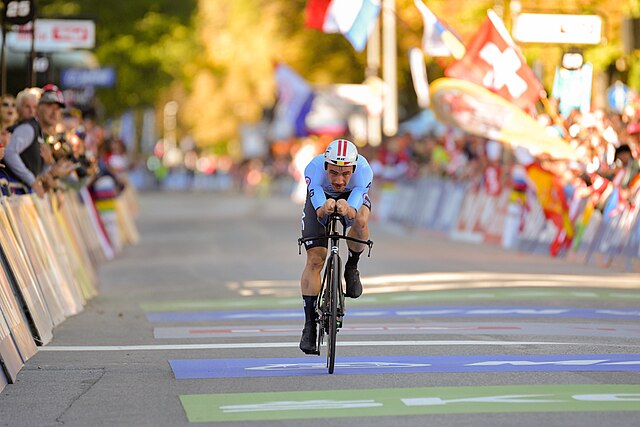
    Credit: Victor Campenaerts @Granada Creative Commons Attribution-Share Alike 4.0

    A classics powerhouse and an engine for the Grand Tours, Victor Campenaerts brings a unique and aggressive dimension to the team. A former UCI Hour Record holder, his immense physiological capacity is now channeled into his role as a relentless attacker and a super-domestique.

    Fresh off a stage victory in the 2024 Tour de France, Campenaerts has proven he is far more than a time trial specialist. His transformation into a formidable rouleur was underscored by his victory at the 2023 Druivenkoers Overijse and earning the super-combativity award at the Tour de France in the same year. This tenacity makes him the perfect rider to infiltrate breakaways, putting pressure on rivals and creating tactical opportunities for the team leaders.

    Campenaerts’ role extends to being a crucial protector on the flat and rolling terrains, capable of setting a blistering pace to deter attacks and position his teammates for the decisive moments. His experience and innovative approach to the sport make him an invaluable asset, the unpredictable and aggressive foil to the team’s more traditional climbers and classics specialists.

    8. Edoardo Affini: Italian temperament collides with explosive power
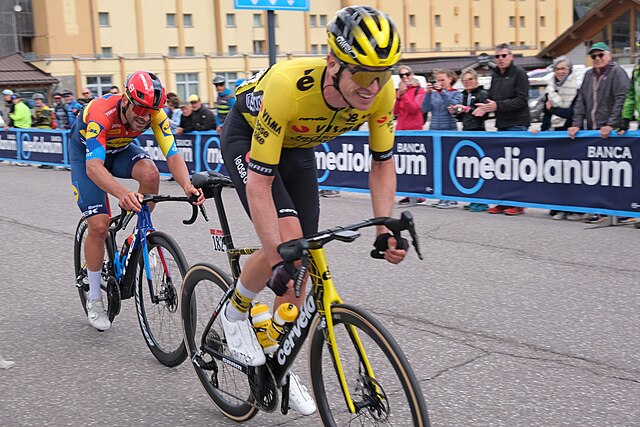
    Credit: Edoardo Affini @kallerna Creative Commons Attribution-Share Alike 4.0

    The powerhouse of the lead-out train, Edoardo Affini is the team’s relentless engine in the flatlands and a formidable time trialist in his own right. Standing at an imposing 1.92 meters, the Italian is the embodiment of raw power, a rider capable of holding a staggering pace in the crucial final kilometers of a race. His role is to be the ultimate protector and pilot for the team’s sprinters and GC leaders, a human shield against the wind.

    Affini’s class against the clock was on full display when he became the 2024 European Time Trial Champion, a victory that underscored his individual prowess. This was further confirmed with a bronze medal at the 2024 World Championships in the same discipline. However, it is his selfless work as a “domestique” that makes him indispensable. Whether he is neutralizing attacks or delivering a textbook-perfect lead-out for a teammate, Affini is the high-torque diesel engine that propels the team towards victory.

    The Enemy at the Gates: Sizing Up the Opposition

    Visma’s immense strength is only relevant in the context of the rivals they face. The 2025 Tour de France is shaping up to be a battle of super-teams, a multi-polar conflict that will be more chaotic and less predictable than ever before.

    The primary obstacle is, of course, Tadej Pogačar and his UAE Team Emirates squad. Pogačar is the reigning champion and arguably the strongest rider in the world, backed by a team that is a mirror image of Visma’s, featuring elite climbers like João Almeida and Adam Yates. This sets the stage for a monumental clash of two cycling titans at the peak of their powers.

    The great disruptor is Remco Evenepoel of Soudal Quick-Step. The Belgian is a double Olympic champion and former Vuelta winner who finished on the Tour podium in 2024. His aggressive, unpredictable racing style means he cannot be ignored and will likely force the other contenders to react to his attacks, potentially creating openings for others.

    Finally, there is the intriguing subplot of Primož Roglič. The former Visma king, who led the team before Vingegaard’s rise, now heads the ambitious Red Bull-BORA-hansgrohe squad. After abandoning the Giro d’Italia, the Tour is his sole focus. He brings an intimate knowledge of Visma’s riders, tactics, and mindset, adding a fascinating layer of internal politics and psychological warfare to the GC battle.

    Final Analyses and Predicition


    Team Visma | Lease a Bike enters the 2025 Tour de France as the absolute superpower and undisputed top favorite. With a roster overflowing with talent and Grand Tour experience, the sole objective is total dominance and a third consecutive overall victory for their captain. Anything less than the Yellow Jersey in Nice would be a disappointment for this armada.

    Strengths:

    • The Vingegaard Factor: At the center of the team is Jonas Vingegaard, the world’s best stage racer. His proven superiority in the high mountains, paired with top-tier time-trialing abilities, makes him the man to beat. The entire team and strategy are perfectly tailored to him.
    • An Unparalleled Support Armada: No other team can boast such a powerful group of support riders. With Sepp Kuss (Vuelta winner), Matteo Jorgenson (Paris-Nice winner), and the blockbuster addition of Simon Yates (Vuelta winner), Vingegaard has three riders at his side who would be leaders on almost any other team. This depth allows the team to control the race on any terrain and neutralize any attack.
    • Multi-Pronged Threat: Beyond the focus on the Yellow Jersey, the team possesses the ultimate all-rounder in Wout van Aert. Van Aert can win sprints, hilly stages, and time trials, all while serving as a crucial domestique. The presence of Simon Yates as a potential co-leader or super-domestique forces rivals to mark multiple riders, which can create tactical openings for Vingegaard.
    • The Engine Room for the Flats: With specialists like Edoardo Affini and Victor Campenaerts, the team has the necessary horsepower to control the peloton on the flat stages, pull back breakaways, and position their captain safely and efficiently at the foot of the key climbs.

    Weaknesses/Challenges:

    • The Weight of Expectation: The team will have to carry the burden of the race every single day. All eyes will be on them to control breakaways and set the pace. This constant pressure can be draining over three weeks and leaves no room for error.
    • Predictability: Their strategy is clear: lead Vingegaard to victory. While their strength often makes this unstoppable, their rivals know exactly what to expect. The challenge for other teams isn’t guessing what Visma will do, but rather finding a weakness in their seemingly impenetrable armor.

    Prediction:

    • Yellow Jersey: The primary objective and the highest probability. Jonas Vingegaard is the overwhelming favorite for the overall victory. If he stays crash- and illness-free, it is difficult to see who can beat him over three weeks. In Jorgenson and Yates, the team also has luxurious backup options who could still finish in the Top 10 even while in a support role.
    • Green Jersey: A strong secondary objective, but a complicated one. Wout van Aert has the skillset to win the points classification. However, it will heavily depend on how much freedom he is granted. Will he have to stay with Vingegaard instead of contesting intermediate sprints? The decision between the yellow and green jersey objectives will be a daily strategic balancing act.
    • Stage Wins: Extremely likely. This team can win on almost any stage. Vingegaard in the mountains; Van Aert in sprints, on hilly stages, and in time trials. Kuss, Jorgenson, or Yates could succeed from a late attack or a breakaway if given the tactical freedom. A realistic prediction is 4-5 stage wins.

    For Team Visma | Lease a Bike, the 2025 Tour de France will be a demonstration of force. Success will be measured solely by the Yellow Jersey on the podium in Nice, with multiple stage wins and potentially other jerseys expected as an impressive bonus.
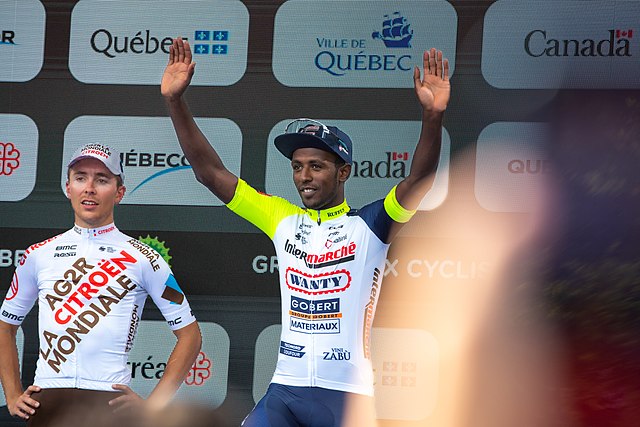
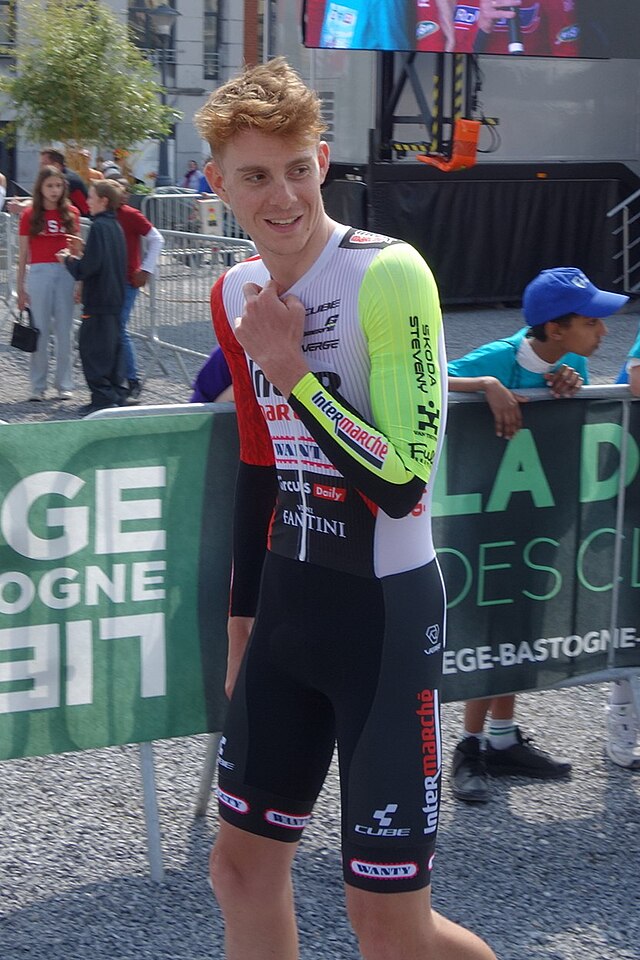
  • The image is seared into the memory of cycling fans: Biniam Girmay, resplendent in the maillot vert, crossing the line on the Champs-Élysées. His 2024 Tour de France was more than a sporting victory; it was a cultural touchstone, the moment a Black African rider not only won a stage but conquered one of the sport’s most prestigious classifications. For his Intermarché – Wanty team, it was the culmination of a half-century journey, a spectacular ascent from a humble Belgian amateur club founded in 1974 to a WorldTour powerhouse capable of shaping the narrative of the world’s biggest race. They had arrived, and in 2025, they are coming for more.

    The eight-man roster selected for the 112th Tour de France is the ultimate expression of the team’s long-held philosophy: a doctrine built on “fearless,” “attacking,” and “opportunistic” racing. This is not merely a collection of individuals but a meticulously crafted tactical unit with two clear, interwoven ambitions: defending Girmay’s Green Jersey and relentlessly hunting for stage wins across every conceivable terrain. New signings like Jonas Rutsch were explicitly drawn to this aggressive style, a testament to a team culture that permeates every decision. To understand the squad heading to Lille for the Grand Départ, one must first understand the DNA of Intermarché – Wanty – a team forged in the fires of underdog battles, now ready to lead the charge.

    Lineup

    1. Biniam Girmay: From Asmara to Glory: An Eritrean Superstar’s Quest for the Green Jersey

    Credit: Biniam Girmay @Lëa-Kim Châteauneuf Creative Commons Attribution-Share Alike 4.0

    At the heart of the team’s ambitions stands one of the most compelling figures in the modern peloton. Biniam Girmay is not just a rider; he is a phenomenon. His journey from Eritrea to the pinnacle of the sport has been groundbreaking, marked by historic victories like his 2022 Gent-Wevelgem triumph and his stage win at the Giro d’Italia, the first by a Black African in a Grand Tour. At just 25 years old, he carries the hopes of a continent on his shoulders, a quiet, composed leader who has become one of the brightest stars in cycling.

    On paper, Girmay’s 2025 season has been one of frustratingly close calls. A string of podium finishes—including second at Classique Dunkerque, second at Rund um Köln, and multiple stage second places—has left him without a victory to his name. To the casual observer, this might suggest a dip in form. However, this narrative is a potential misinterpretation of a highly calculated, proven strategy.

    A look back at his 2024 campaign reveals a similar pattern of “floating around for victories” before he arrived at the Tour in peak condition. The key to understanding this lies in the lessons learned from a difficult 2023 season. Following a heavy crash at the Tour of Flanders and a challenging Tour de France debut, the team’s performance staff conducted a thorough review. They identified Girmay’s uniquely elite recovery ability—better than anyone else on the team. Realizing they were not maximizing this physiological gift, they made a crucial adjustment: they implemented a harder, more structured training program designed to push him to his limits, confident in his capacity to absorb the load and rebound stronger. As team performance manager Aike Visbeek explained, “we learned that we were not maximising that strength and we weren’t training him hard enough”.

    Therefore, the 2025 season is not a slump; it is the deliberate execution of a tailored plan. The team is leveraging Girmay’s unique physiology to build him towards an absolute peak in July. This approach contrasts sharply with that of other sprinters who may target wins throughout the year. For the Tour de France, this makes Girmay arguably more dangerous, not less. He arrives rested, meticulously prepared, and with a hunger sharpened by a season of near misses.

    Girmay’s path to a second maillot vert is anything but certain. The 2025 Tour features one of the most formidable collections of sprinters in recent memory. His primary rivals represent the absolute elite of fast men. Jasper Philipsen (Alpecin – Deceuninck), the 2023 Green Jersey winner, is a proven force with a powerful lead-out. Tim Merlier (Soudal Quick-Step) has been the season’s most prolific winner, racking up victories with astonishing consistency. And Jonathan Milan (Lidl – Trek), a two-time points classification winner at the Giro d’Italia, brings immense power and a dedicated team. The field is so deep that even all-round superstars like Wout van Aert and Tadej Pogačar could disrupt the points classification with their versatility.

    Against this backdrop, Girmay’s greatest advantage is his own versatility. He is not a pure, flat-track sprinter. His background as a Classics contender means he can not only survive but thrive on stages that are too tough for his bulkier rivals. The 2025 route offers several such opportunities, particularly in the opening week. The hilly finish into Boulogne-sur-Mer on Stage 2 and the iconic punch of the Mûr-de-Bretagne on Stage 7 are tailor-made for Girmay to collect valuable points while others are dropped. It is this ability to fight for victory on varied terrain that makes him a true three-week contender for the Green Jersey, a weapon his rivals will struggle to counter.

    2. Roel van Sintmaartensdijk: The Engine

    Credit: Roel van Sintmaartensdijk @Cs-wolves Creative Commons Attribution-Share Alike 4.0

    Standing at an impressive 1.97m (6’5″), the young Dutchman Roel van Sintmaartensdijk is accurately described as a formidable “draught horse” and the powerhouse of the sprint unit. His primary role on flat stages is indeed to act as the locomotive at the front of the peloton. This involves spending long hours in the wind to control the pace, chase down breakaways, and ensure the race culminates in a sprint finish, thereby setting the stage for his team’s sprinter, Biniam Girmay. This selfless, high-power output is crucial for maximizing Girmay’s chances of victory. While the lead-out rating of 87/100 is a qualitative assessment rather than an official statistic, it effectively illustrates his immense power and value in this demanding role, highlighting his status as a top-tier specialist in pulling the peloton.

    3. Vito Braet: The Link-Man

    Credit: Vito Braet @(User:Løken) Creative Commons Attribution-Share Alike 4.0

    Vito Braet, a versatile Belgian rider, serves as the vital connection between the powerful workhorses and the high-speed final lead-out men. His capabilities are well-rounded, possessing the necessary punch to handle hilly sections of a race and the speed to maintain optimal positioning for the team within the frantic final 5 kilometers. This is supported by his strong performances in both challenging terrain and sprint finishes. His class was notably demonstrated at the 2024 Figueira Champions Classic, where he secured an impressive second-place finish. He was beaten only by the superstar Remco Evenepoel, a result that showcased both his fast finish and tactical intelligence. As a key new addition to the team’s sprint machine for 2025, his conceptual lead-out score of 86/100 underlines his elite proficiency in this role.

    4. Laurenz Rex: The Penultimate Powerhouse

    Credit: Laurenz Rex @Renhour48 Creative Commons Zero, Public Domain Dedication

    As the penultimate man in the sprint train, Laurenz Rex is a true powerhouse, hardened by the rigors of the toughest one-day races, the Classics. The provided text mentions top-10 finishes in the 2025 season; however, looking at his verified results from the most recent completed season (2024), he did not secure top-10 finishes at Paris-Roubaix or Gent-Wevelgem. He finished a respectable 16th at Gent-Wevelgem and 22nd at Paris-Roubaix (where his teammate Madis Mihkels was 10th). Despite this inaccuracy in the original text, his aggressive performances in these grueling races demonstrate that he possesses the raw strength and grit required to pilot Girmay through chaotic and physically demanding finales. The world-class lead-out score of 93/100 should be viewed as a testament to his recognized ability to navigate the peloton’s maelstrom and deliver his sprinter in a prime position, placing him among the best pilots in the sport.

    5. Hugo Page: Girmay’s Explosive Key

    Credit: Hugo Page @Kakoula10 Creative Commons Attribution-Share Alike 4.0

    The final rider before Biniam Girmay launches his sprint is Hugo Page, a young and explosive talent from France. He is a capable sprinter in his own right, a crucial quality for a final lead-out man who needs to accelerate deep into the finish. His history of strong results in bunch kicks, including a second-place finish at the 2023 Cadel Evans Great Ocean Road Race and a third-place finish on a stage of the 2024 Critérium du Dauphiné, substantiates this. His role is to use this explosive speed to deliver Girmay onto the wheel of a rival or into clear air at the perfect moment, typically inside the final 200 meters. The elite 90/100 lead-out score is a strong indicator of his recognized expertise and precision in this high-pressure and critical position.

    6. Georg Zimmermann: Countless breakaway groups until the desired victory?

    Credit: Georg Zimmermann @Hoebele Creative Commons Attribution-Share Alike 4.0

    Georg Zimmermann is the team’s designated man for the high mountains. The German climber comes into the Tour with soaring confidence after securing the overall victory at the 2025 Giro d’Abruzzo, a performance that demonstrated both his climbing legs and his tactical acumen. He is a specialist at infiltrating the right moves on the toughest days, a fact underscored by his near-miss second place on a Tour stage in a previous edition. He will have his sights firmly set on the Pyrenean and Alpine stages, such as the summit finishes at Hautacam (Stage 12), Luchon-Superbagnères (Stage 14), Mont Ventoux (Stage 16), and the monstrous Col de la Loze (Stage 18).

    7. Louis Barré: Intermache’s new wildcard

    Credit: Louis Barré @Hoebele Creative Commons Attribution-Share Alike 4.0

    The revelation of the 2025 spring campaign, Louis Barré has made a stunning leap to become one of the peloton’s most exciting Classics talents. His sixth place at the Amstel Gold Race and third at Paris-Camembert are testament to his explosive power on the short, steep climbs that define the Ardennes. The team has shown immense faith in the 25-year-old Frenchman, granting him a protected stage-hunting role in his debut Tour—a trust he is eager to repay. He is perfectly suited for the hilly, unpredictable stages where a powerful attack can succeed, such as the finishes in Boulogne-sur-Mer (Stage 2), Rouen (Stage 4), and Mûr-de-Bretagne (Stage 7).

    8. Jonas Rutsch: The German powerhouse with infinite willpower

    Credit: Jonas Rutsch @Renhour48 Creative Commons Zero, Public Domain Dedication

    A German powerhouse with a massive engine. Standing at an imposing 1.96m (6’5″), Jonas Rutsch is built for long, punishing days in the wind. His phenomenal sixth-place finish at the 2025 Paris-Roubaix, a race he adores, is a clear indicator of his world-class power and resilience. While he will play a key role in the “Classics Phalanx” on flat days, he will be let off the leash on rolling, transitional stages. He is the team’s prime candidate for a long-range solo attack or for driving a small, powerful breakaway to the finish line.

    The Arsenal: The Tech Behind the Tactics

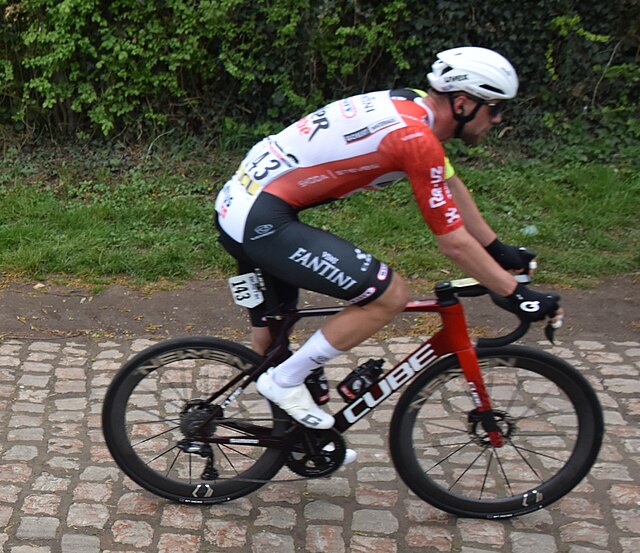
    A team’s ambitions are only as good as the equipment that underpins them. For Intermarché – Wanty, technology is a key part of their performance strategy. The riders will be aboard German-engineered Cube bikes, choosing between the aerodynamic Cube Litening Aero C:68X for flat and fast stages, and the lightweight Litening Air C:68X for the high mountains. This arsenal is completed with Shimano’s flagship Dura-Ace Di2 groupsets and Newman Advanced SL wheels.  

    However, the most intriguing technological development is a potential race-winning advantage in their tyres. For 2025, the team has entered a deep technical partnership with French manufacturer Hutchinson, born from an explicit search for a “technological edge”. The collaboration goes beyond simple sponsorship; it is a joint research and development project focused on creating a next-generation race tyre. This prototype, nicknamed the “MotoGP tyre” by the riders, is being co-developed to address what the team identified as the “Achilles’ heel” of modern tubeless systems: grip in wet and challenging conditions.

    The focus on “exceptional grip” provides a tangible, race-critical advantage. Superior traction allows for later braking into corners, more speed carried through technical finales, and more confident descending for breakaway riders. In a sport decided by fractions of a second, a tyre that provides a greater margin for error and a higher performance ceiling on wet roads could be the difference-maker. This pursuit of a grip advantage could prove decisive in Girmay’s chaotic sprints and in the daring descents of the team’s stage hunters, elevating this partnership from a simple equipment choice to a genuine tactical weapon.

    Final Analyses and Predicition


    Intermarché-Wanty arrives at the 2025 Tour de France with a clear and singular focus: stage victories. By leaving their primary GC climber at home, the team has assembled a dynamic and aggressive squad built entirely for opportunistic racing, making them a dangerous wildcard on nearly any day of the race.

    Strengths:

    • Pure Focus on Girmay: With no GC ambitions, the team can dedicate significant resources to Biniam Girmay. He is their undisputed leader and one of the world’s best. His proven ability to win sprints after hard, hilly stages makes him a prime contender for multiple victories and a serious threat for the Green Jersey.
    • A Formidable Breakaway Engine: This roster is packed with riders perfectly suited for long-distance escapes. Georg Zimmermann has come close to a Tour stage win multiple times and has the climbing ability to succeed. Laurenz Rex and Jonas Rutsch are powerful rouleurs who can thrive on transitional stages, while newcomers like Louis Barré and Vito Braet will be eager to make a name for themselves by infiltrating breakaways.
    • Unified Strategy: The absence of a GC rider eliminates any internal conflict for resources or objectives. Every rider on the team has one of two jobs: support Biniam Girmay for a sprint finish or get into a breakaway and fight for the stage win. This clarity of purpose can be a significant advantage.

    Weaknesses/Challenges:

    • No GC Presence: This is a deliberate choice, not a weakness in the traditional sense, but it means the team will be entirely absent from the overall classification battle. They will have no voice in the high mountains when the race for the yellow jersey ignites.
    • The Green Jersey Dilemma: The team’s biggest strategic challenge will be balancing the ambition of winning the Green Jersey with Girmay against giving their powerful breakaway riders the freedom to chase their own success. Committing to Green requires near-total dedication, potentially neutralizing their other major strength.
    • Predictability: While their strategy is unified, it is also transparent. Other teams know that Intermarché-Wanty will either be trying to get in the breakaway or setting up a sprint for Girmay. This can make it harder for their riders to surprise the peloton.

    Prediction:

    Green Jersey: A primary objective and a very strong possibility. Girmay has the ideal profile to win the points classification. With a dedicated support crew including Hugo Page and Roel van Sintmaartensdijk for the lead-outs, he will be a favorite for the maillot vert, challenging the pure sprinters.

    Stage Wins: Highly likely. This is the team’s raison d’être. Girmay is a strong candidate to win 1-2 stages. The sheer number of breakaway specialists like Zimmermann, Rex, and Rutsch makes it probable they will convert at least one of their many attempts into a victory. A prediction of 2-3 stage wins is the benchmark for success.

    The 2025 Tour de France for Intermarché-Wanty will be an all-or-nothing hunt for daily glory. Success will not be measured by the final timesheets in Nice, but purely by the number of victory salutes and a potential Green Jersey on the podium.

  • Credit: KI

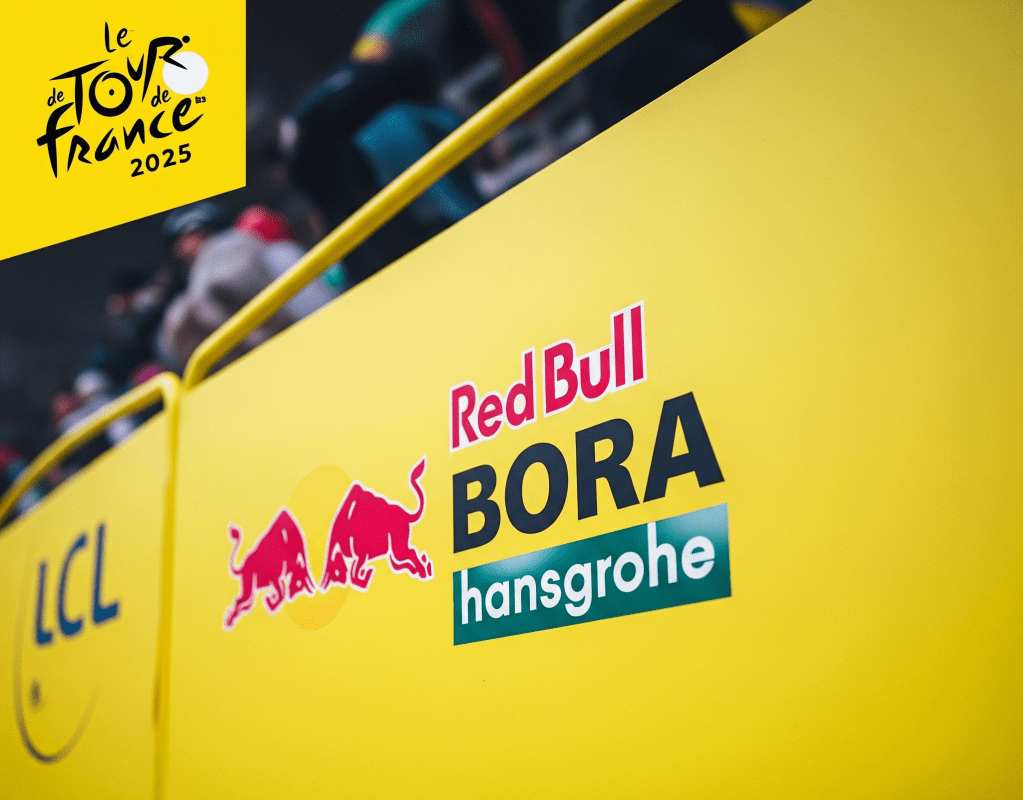
    When the news broke that Red Bull was not just sponsoring but acquiring a majority stake in the BORA – hansgrohe cycling team, the tectonic plates of the professional peloton shifted. This was not merely a new logo on a jersey; it was the arrival of a sporting juggernaut, a brand whose history in Formula 1 and other ventures is defined by a singular, relentless pursuit of dominance. The 2025 season marks the first full campaign under this new world order, and with it comes a weight of expectation that could crush lesser teams. Team Manager Ralph Denk, once the leader of a plucky German outfit, now speaks the language of a global CEO, stating his ambition is not just to compete, but to “be the best in every way” and to find “the Max Verstappen of cycling”.

    This transformation is more than just financial. It is a complete operational and philosophical overhaul. The team now has full access to Red Bull’s legendary Athlete Performance Center (APC) in Austria and has poached top-tier performance staff, including aerodynamics guru Dan Bigham from rivals INEOS Grenadiers. As Head of Performance Dan Lorang succinctly put it, “What I used to do alone, now three people do”. After a 2024 season that saw a triumphant Vuelta a España victory for Primož Roglič but a Tour de France campaign described as a “disaster” by the team’s own lofty new standards, the mission for July 2025 is clear: this is the year the Red Bull project must take flight. This is the year they prove they are not just contenders, but conquerors.

    The Fight for the Crown: The Roglič-Lipowitz Conundrum

    At the heart of Red Bull – BORA – hansgrohe’s Tour de France ambitions lies a fascinating and complex leadership dynamic. They arrive not with a single spearhead, but with a trident of mountain talent so potent it could redefine the tactical landscape of the race.

    Lineup

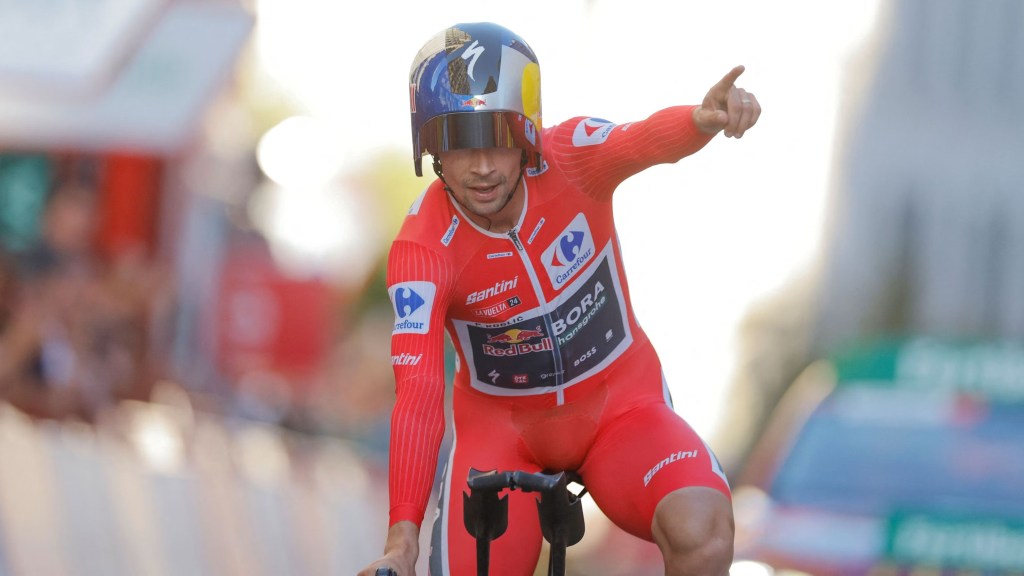
    1. Primož Roglič: The General’s Last Stand:

    Credit: Heute.at

    At 35 years old, Primož Roglič is a man racing against time, his rivals, and the ghosts of his own past. He departed the all-conquering Jumbo-Visma team for one reason: a final, untethered shot at the one prize that has so cruelly slipped through his fingers, the Tour de France. His career is a study in resilience, a dramatic cycle of devastating crashes followed by astonishing comebacks. On five separate occasions, he has followed a Grand Tour disappointment with a victory in the next one he started.

    His 2025 season has eerily followed this script. A commanding overall victory at the Volta a Catalunya, where he looked imperious, was followed by a frustrating, crash-induced abandonment at the Giro d’Italia. For any other rider, this would be a disaster. For Roglič, this is his signature “redemption arc” setting the stage for July. The 2025 Tour route, with a long, flat 33 km individual time trial on Stage 5 and a decisive 10.9 km mountain time trial to Peyragudes on Stage 13, seems tailor-made for his powerful, explosive style. Yet, the biggest battle will be internal. In interviews, he appears to be managing the immense pressure, focusing on a “day by day” approach and acknowledging that his primary rival, Tadej Pogačar, is “one gear ahead”. This is his last, best chance to exorcise the demons of the 2020 Planche des Belles Filles and complete his palmarès. The entire Red Bull project hinges on whether he can finally navigate three weeks of France unscathed.

    2. Florian Lipowitz: The Prince in Waiting

    Credit: Florian Lipowitz @Kakoula10 CC BY-SA 4.0, via Wikimedia Commons

    Just as Roglič’s narrative seems set in stone, a new character has exploded onto the scene, threatening to rewrite the entire script. Florian Lipowitz, the 24-year-old German, has transformed from a promising talent into a bona fide phenomenon in 2025. His results are staggering: second overall at Paris-Nice, fourth at the Tour of the Basque Country, and a stunning third place at the Critérium du Dauphiné, where he beat every GC contender not named Pogačar or Vingegaard.

    This is not the performance of a super-domestique; it is the calling card of a future Grand Tour champion. His emergence creates a fascinating strategic paradox for the team. Publicly, Lipowitz remains deferential, stating that his “main goal will be to help” Roglič, who is “still the big leader”. But his strength presents a tactical goldmine. The team can now play a two-card trick that will give rivals at UAE Team Emirates and Visma | Lease a Bike nightmares. They can send Lipowitz on the attack, forcing them to chase a rider who has proven he can drop almost anyone. This could isolate the main favorites and create the perfect launchpad for a Roglič counter-move. However, this dynamic is fraught with peril. What happens if, on the slopes of the Col de la Loze in the final week, the apprentice proves stronger than the master? The memory of the Roglič-Vingegaard leadership transition at the 2022 Tour looms large. How Red Bull – BORA – hansgrohe manages this two-headed monster—turning it into a tactical advantage rather than a source of internal friction—will be the most scrutinized and decisive element of their race.

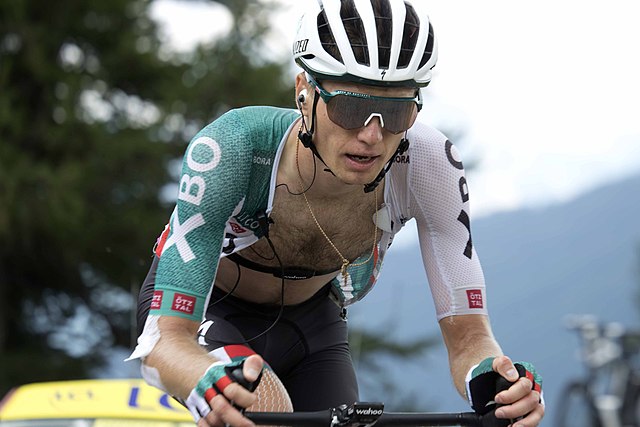
    3. Aleksandr Vlasov: From Leader to Tactical Weapon

    Credit: Aleksandr Vlasov @filip bossuyt Creative Commons Attribution 2.0

    The ultimate testament to the team’s depth is Aleksandr Vlasov. A rider who has finished fifth in the Tour de France (2022) and fourth in the Giro d’Italia (2021) is now designated as a mountain helper and stage hunter. For most teams, he would be the undisputed leader. For Red Bull – BORA – hansgrohe, he is their agent of chaos.

    His 2025 season has been quiet, not as good as his 2022 year. Netherless Vlasov is the perfect satellite rider, a threat too dangerous to ignore. On the major mountain stages like Hautacam (Stage 12), Mont Ventoux (Stage 16), or Courchevel (Stage 18), the team can launch him into the early breakaway. This presents a tactical nightmare for their rivals. Do they burn their own domestiques to chase down a former top-five finisher, leaving their own leaders exposed to the inevitable attacks from Roglič and Lipowitz? Or do they let him go, risking he gains minutes on the general classification? Vlasov’s role is not simply to pull on the front; it is to be a constant, disruptive threat that forces every other team to race on Red Bull’s terms.

    4. Laurence Pithie: The Multi-Tool for Red Bull’s Tour Ambitions

    Credit: Laurence Pithie @Nicola Wikimedia CommonsCC-by-sa 4.0

    A Tour is not won by climbers alone. Red Bull – BORA – hansgrohe has assembled a versatile and powerful support unit designed to win stages, control the chaos of the opening week, and deliver their leaders to the mountains with their ambitions intact. Another important piece of this puzzle is the exciting new signing from New Zealand, Laurence Pithie. A true “multi-tool,” Pithie’s strong classics campaign 2024 made him interesting for a lot of cycling teams. His decision was to join the new Red Bull – Bora – hansgrohe project. His classics season 2025 was mixed, but recently he has shown improving form at the Dauphine. He will serve as the third-to-last man in the train but also has the freedom to hunt for stages from breakaways on the hilly days that litter the first two weeks of the race.

    5. Mick van Dijke: The Engine Room and The Enforcer

    Credit: Mick van Dijke @(User:Løken)  Creative Commons Attribution-Share Alike 4.0 International

    Protecting Roglič through the treacherous first week is paramount, given his history of crashes. To this end, the team has deployed a powerful defensive unit. Mick van Dijke, a 1.90m Dutch powerhouse, is the perfect engine for the flat stages, tasked with shielding his leaders from the wind and positioning the team at the front. His high rating on cobbles makes him especially valuable for the nervous early stages.

    6. Gianni Moscon: Road captain with protective instinct

    Credit: Gianni Moscon @Felouch Kotek Creative Commons Attribution-Share Alike 4.0

    The role of road captain falls to the formidable Gianni Moscon. Signed for his experience and grit, Moscon is the team’s on-bike brain, a rider known for his aggressive positioning and tactical awareness, honed while serving as a key domestique for Remco Evenepoel in previous years. His modest 2025 results are irrelevant; his job is not to win, but to ensure his leaders don’t lose. Together, Van Dijke and Moscon form a fortress around Roglič and Lipowitz. A successful first week for them is one where nothing happens, delivering their GC hopes to the first mountain stage fresh and ready to fight.

    7. Danny van Poppel: The Lead-Out Maestro

    Credit: Danny van Poppel @Geof Sheppard Creative Commons Attribution-Share Alike 4.0

    Every great sprinter needs a great pilot, and in Danny van Poppel, Meeus has arguably the best in the business. The 31-year-old Dutchman is the son of sprinting royalty, Jean-Paul van Poppel, and he rides with an innate tactical intelligence that seems coded into his DNA. He is not just a lead-out man but an artist in the chaotic final kilometers. Cycling analytics models award him a near-perfect 99-point rating for his lead-out craft, a testament to his intelligence and positioning. But to label him merely a guide would be a gross disservice. Van Poppel is a world-class sprinter in his own right, possessing a 92-point sprint rating that matches Meeus’s and having already claimed two stage wins for himself at the Tour de Hongrie this season. He also became Dutch road race champion a few moments ago, beating top sprinters such as Olav Koij and Dylan Groenewegen. This dual threat makes him the ultimate final man and a dangerous Plan B for the team on tougher, more attritional sprint stages where his experience and power can be the decisive factor.

    8. Jordi Meeus: The Champs-Élysées Conqueror

    Credit: Jordi Meeus @(User:Løken) Creative Commons Attribution-Share Alike 4.0

    The designated spearhead for the flat stages is the 26-year-old Belgian, Jordi Meeus, a rider who carries the confidence that only a victory on the Champs-Élysées can bestow. His stunning triumph in the final stage of the 2023 Tour de France was the biggest of his career, proving he can deliver on the grandest stage. Meeus enters the 2025 Tour in scorching form, having already secured three victories this season: a stage at the Volta ao Algarve and, crucially, two confidence-boosting wins in June at the Tour de Suisse and the prestigious Copenhagen Sprint. These late victories signal a perfectly timed peak. With a powerful 92-point sprint rating from analytics models, he is ranked as the 6th best sprinter at the start of the race and is a clear threat for multiple stage wins.

    The 2025 Tour de France route appears to be a perfect canvas for the masterpiece Red Bull – BORA – hansgrohe is trying to create. Its blend of flat sprints, treacherous hilly stages, two crucial time trials, and iconic mountain-top finishes offers an opportunity for every single rider on this versatile squad to shine. Their tactical approach can shift daily, from controlling for a bunch sprint to blowing the race apart in the high mountains.

    Final Analyses and Predicition


    Red Bull – BORA – hansgrohe arrives at the 2025 Tour de France as arguably one of the most fascinating teams in the race. Their potential is immense, but so are the challenges.

    Strengths:

    • Unprecedented Tactical Depth: The ability to deploy three distinct GC-level threats in the mountains (Roglič, Lipowitz, [Vlasov]) is a luxury.
    • Total Versatility: They have a credible contender for victory on every type of terrain the Tour offers.
    • The Red Bull Factor: Backed by near-limitless resources, cutting-edge sports science, and an ingrained corporate culture of winning.  
    • World-Class Support: A proven sprint train and an experienced, powerful engine room provide a stable foundation for their lofty ambitions.

    Weaknesses/Challenges:

    • The Pogačar/Vingegaard Problem: They are not operating in a vacuum. They face two of the most dominant Tour riders of the modern era, both backed by formidable super-teams of their own.  
    • The Leadership Question: The Roglič-Lipowitz dynamic is their greatest strength and their greatest potential weakness. It must be managed with tactical precision and zero ego.
    • Roglič’s Durability: The captain’s propensity for finding misfortune in the Tour’s first week remains the team’s biggest liability.

    Prediction:

    Green Jersey: Unlikely. While they will contest sprints, the team’s focus is on the overall classification. Meeus will be a threat for stage wins but is not on the same tier as pure sprinters like Jasper Philipsen or Jonathan Milan, who are the outright favorites for the points classification.

    Stage Wins: Highly likely. The team’s versatility should see them celebrate multiple times. A prediction of 2-3 stage wins seems achievable, likely spread between Meeus in a sprint, Pithie from a hilly breakaway, and one of their GC leaders conquering a mountain stage.

    The 2025 Tour de France will be the ultimate proving ground. It is the moment we discover if the immense investment, strategic overhaul, and sky-high ambition can truly give this team wings and launch them to the very pinnacle of the sport.